
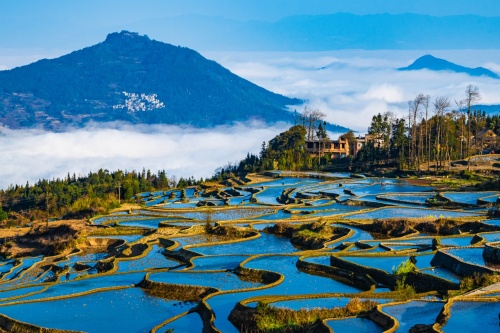
Stretching from the misty tropical rainforests of the south to the snow-capped Himalayan plateaus of the north, Yunnan Province is one of China’s most spectacular and biologically diverse regions.
During the mid-summer months, when many lowlands experience standard summer heatwaves, Yunnan stands out as a pristine natural sanctuary. Thanks to its undulating topography and high-altitude microclimates, popular highland destinations like Dali, Lijiang, and Shangri-La enjoy incredibly comfortable summer temperatures, usually hovering between 18℃ and 25℃
For families, cultural enthusiasts, and photography lovers, a summer journey through Yunnan offers a perfect blend of refreshing mountain air, rich ethnic minority heritage, and deep educational encounters with wild nature. Here is your definitive, structured guide to planning the ultimate summer escape in Yunnan.
The Ultimate Family Eco-Adventure: Rainforests, Red Pandas & Ancient Tea Forests

For families traveling with children, the southern, sub-tropical valleys of Yunnan provide a living classroom of ecological marvels. The region of Pu’er and Xishuangbanna acts as a lush green corridor where kids can engage directly with unique wildlife and learn about ancient biodiversity.
In the misty mountains of Pu’er, children can meet playful, free-roaming red pandas in their natural habitat and explore historic coffee plantations. Further up on the mist-shrouded Jingmai Mountain, families can wander through the newly designated UNESCO World Heritage ancient tea forests, where local communities have harvested wild tea leaves beneath the towering forest canopy for over a thousand years. Descending into Xishuangbanna, the adventure culminates with dazzling Theravada Buddhist temples, vibrant Dai minority tribal traditions, and the legendary Starlight Night Market along the Lancang (Mekong) River.
Explorer’s Tip: If you want to ignite your children’s curiosity with a hands-on, deeply educational summer holiday, you can secure this seamless route on our specialized Xishuangbanna & Pu'er Eco & Culture Tour.
Mythical Highlands & Wild Animal Encounters: Finding Shangri-La

As you travel north, the landscape rises dramatically, with elevations climbing from 1200m to over 3300m. Here, the air turns crisp and cool, leading you into the fabled alpine utopia of Shangri-La.
This alpine region is home to some of the world’s rarest and most beautiful creatures, most notably the endangered Yunnan Snub-nosed Golden Monkey. Living high in the evergreen fir forests of the Baima Snow Mountain Nature Reserve, these unique, expressive primates are a spectacular sight for nature lovers. Beyond wildlife, Shangri-La offers spectacular vistas of the sacred Meili Snow Mountain range, deep pine-scented gorges, and the massive, golden-roofed Songzanlin Tibetan Monastery, where the chanting of monks echoes through the cool mountain breeze.
Explorer’s Tip: To seek out the mystical alpine peaks and catch a rare, memorable glimpse of the snub-nosed monkeys in their protected habitat, explore our specialized wildlife itinerary: Shangri-La Golden Monkey Discovery.
If you prefer a more rugged mountain pilgrimage that takes you deep into the spiritual valleys of Dali, Lijiang, and the sacred peaks of Deqin, take a look at our Shangri-La Adventure with Meili Snow Mountain & Mount Jizu.
Immersion in Living Cultures: Terraced Landscapes and Ethnic Diversity
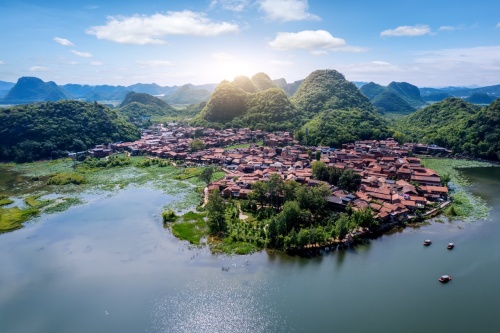
Yunnan is home to 25 of China’s 56 officially recognized ethnic minorities, making it the country's ultimate cultural mosaic. For history buffs and photography enthusiasts, summer is an incredible time to witness how these communities live in perfect harmony with nature.
In the southern highlands of Yuanyang, the Hani minority has spent 1300 years carving the mountainsides into the spectacular Yuanyang Rice Terraces. Under the summer sun, these water-filled steps glow in deep emerald hues, reflecting the shifting clouds above. Moving north into the ancient towns of Dali and Lijiang, you will encounter the traditional tie-dyeing workshops of the Bai people and the living pictographic Naxi Dongba culture.
Explorer’s Tip: For travelers who want to capture the absolute best light, colors, and tribal traditions of Yunnan’s diverse ethnic groups, we highly recommend our comprehensive cultural routes. You can experience this deep geographical dive on the Yunnan In-depth Tour of Yuanyang, Dali & Lijiang or capture the raw, colorful beauty of the southern borderlands on our tailored Photo Expedition of Southeast Yunnan.
Summer Yunnan Travel: Frequently Asked Questions
Q1: Is summer a good time to visit Yunnan despite the rainy season?
A: Yes, summer is actually one of the most beautiful and comfortable times to visit Yunnan. While July and August fall within the monsoon season, rainfall in Yunnan’s highlands rarely manifests as all-day downpours. Instead, you will experience brief, refreshing afternoon showers that clear the dust, intensify the lush green colors of the valleys, and reveal dramatic cloud formations over the snow-capped peaks. Furthermore, the rain acts as a natural cooler, keeping average daily temperatures at a highly comfortable 18℃ and 25℃.
Q2: How can families manage the altitude difference when traveling with children?
A: The key to a safe and comfortable high-altitude trip is gradual acclimatization. Our itineraries are strategically designed to start in lower valleys (like Dali at approximately 2000m) before moving slowly upward to Lijiang (2400m) and finally Shangri-La (3000m). This gentle ascent allows your children’s natural respiratory systems to adapt seamlessly. We also recommend keeping children well-hydrated, avoiding strenuous physical activity on the first day of arrival in Shangri-La, and keeping lightweight layers handy for temperature drops.
To explore this classic high-altitude transition route with maximum comfort, check out our popular Classic Shangri-La Tour.
Q3: Why is a private guide essential for exploring Yunnan’s ethnic minority regions?
A: Traveling with a private guide ensures seamless logistics, real-time safety monitoring, and profound cultural translations in remote minority villages. Many of Yunnan’s most authentic villages are deeply tucked away in remote mountain valleys where English is rarely spoken and local dialects dominate. A dedicated CITS private guide acts as a cultural bridge, handling complex mountain driving, monitoring local weather, and curating spontaneous cultural exchanges with local ethnic hosts.
Q4: How can travelers experience the ultimate diversity of Yunnan’s landscapes and cultures in a single trip?
A: The best way to capture Yunnan’s complete diversity is to choose an in-depth route that links imperial capitals, highland minority kingdoms, and subtropical river gorges. For travelers who want to see it all—from the historic landmarks of the north to the misty mountains of Dali and Shangri-La, concluding with a scenic cruise along the emerald waters of Guilin—a comprehensive multi-provincial exploration is the perfect solution.
To secure this grand, hassle-free trans-China itinerary, discover our flagship China Ethnic Discovery Tour.
Ready to swap the summer heatwaves for the cool alpine winds and ancient tea forests of Yunnan? Discover our tailored eco-cultural routes and customize your private family holiday today at www.cits.net.